
European and US Handpiece Connections
The two main flexible-shaft connections used for jewellery handpieces are the US Connection (standard Foredom Key Tip / Quick Disconnect) and European Slip Joint. They are not directly interchangeable. Identify the shaft end and sheath connector before choosing a handpiece; a motor may have been fitted with replacement shafting.
US Connection | European Slip Joint | Connection Comparison
US Connection (Key Tip / Quick Disconnect)
The standard US shaft has a short drive key projecting from the inner shaft. The matching handpiece pushes over the sheath and engages the keyed drive. On typical Foredom standard handpieces, a spring clip and catch ball retain the handpiece on the sheath. It pulls off without operating a separate latch.
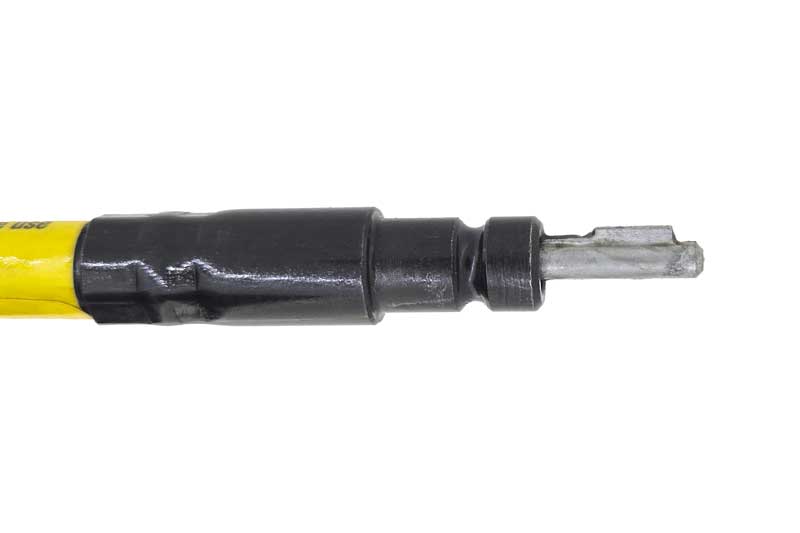
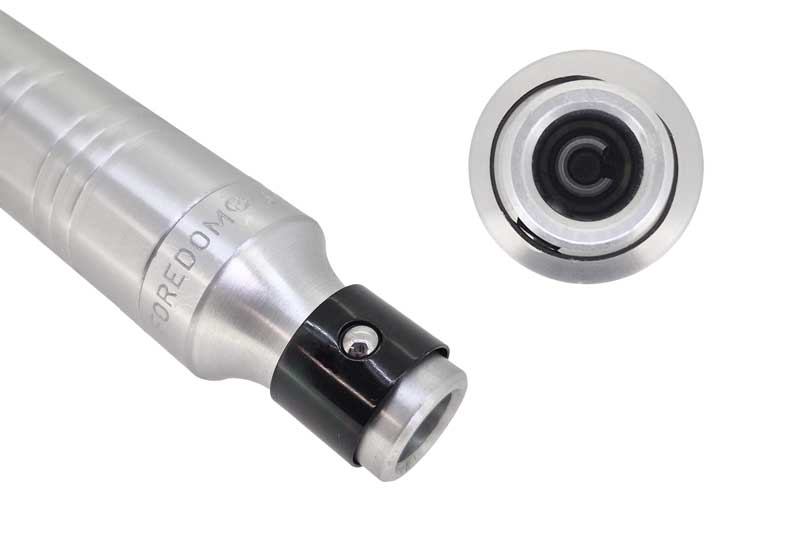
Advantages: Fast handpiece changes; broad availability of compatible standard handpieces; the handpiece can rotate relative to the outer sheath connection, allowing more freedom of positioning without twisting the shaft.
Shortcomings: A worn, weak or lost catch ball or retaining spring can cause a loose connection. Check the lock and drive engagement before use. It cannot be attached directly to a European Slip Joint shaft.
Replaceable parts: The SP43 spring clip and SP48 catch ball are available as spare parts for compatible standard (non-slip-joint) handpieces. They are separate from the internal spindle ball bearings. Check the exact handpiece model and parts diagram before replacing them.
European Slip Joint
European shafting has a longer, narrow mating end with a locking clip or lever on the sheath end. The matching handpiece slides onto the connection and engages the internal drive; operate the clip to release it.
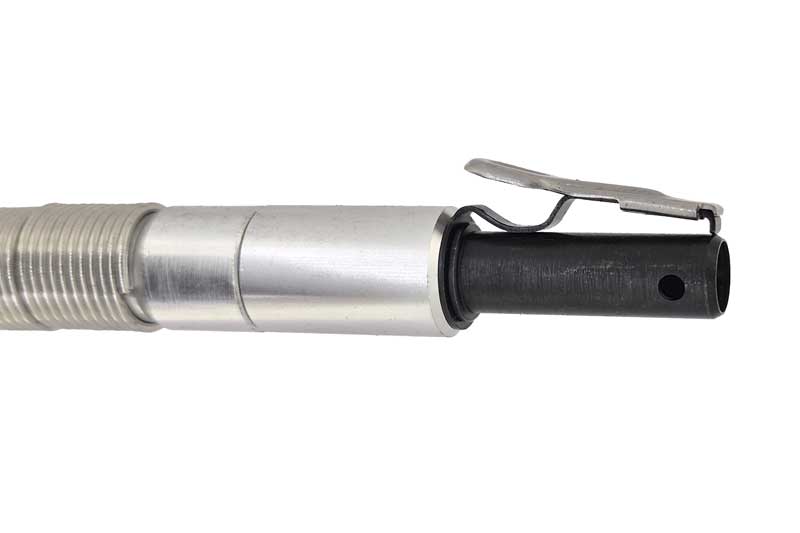
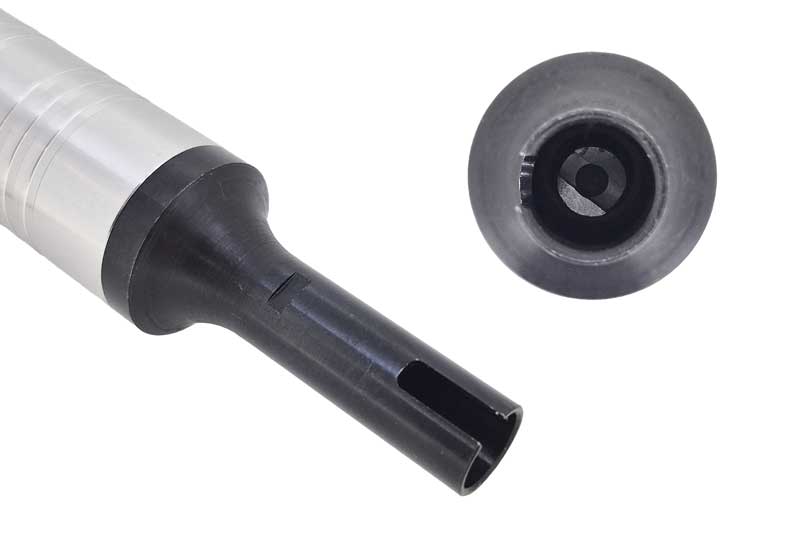
Advantages: Positive, deliberate locking mechanism; widely used with European-style pendant motor systems; no reliance on the US-style spring catch ball.
Shortcomings: Unlike the standard US coupling, the handpiece does not freely rotate relative to the sheath while attached. This can limit handpiece orientation and require repositioning the flexible shaft. The latch must be operated to detach the handpiece; bent or worn retaining clips can prevent secure engagement.
Service: Inspect the clip, mating socket and drive engagement. Its retention mechanism differs from the US spring clip and catch ball. Use the relevant slip-joint shafting and handpiece parts diagrams to identify repair or replacement components.
Connection Comparison
Browse Rotary Handpieces or Hammer Handpieces in the catalogue.
| Feature | US Connection | European Slip Joint |
|---|---|---|
| Typical retention | Spring clip and catch ball | Positive locking lever/clip |
| Removal | Pull off | Operate clip, then pull off |
| Rotation against sheath | Can rotate | Locked orientation |
| Compatible with | US Key Tip handpieces | European Slip Joint handpieces |
Compatibility note: The connection system is separate from the chuck/collet and bur shank size. Heavy-duty square-drive flexible shafts and dedicated micromotor connections are additional, incompatible systems. Changing between US and European styles requires a compatible shaft/sheath assembly and handpiece, and possibly motor connector parts.
See Rotary Handpieces and Hammer Handpieces.
Further reading: Foredom shaft and handpiece identification.